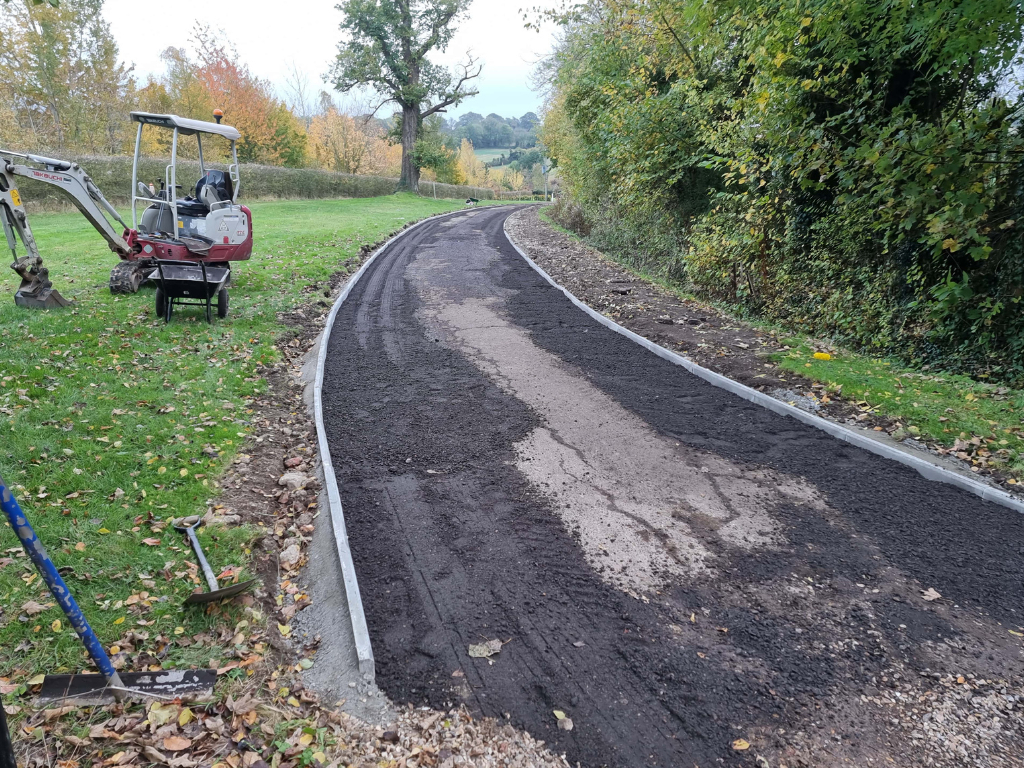
When Should an Existing Roadway Be Resurfaced Rather Than Continually Repaired?
Localised roadway damage can often be corrected with a well-planned repair. A small pothole, isolated crack or damaged edge does not necessarily mean that the complete surface needs attention. However, repeated repairs may eventually stop providing a dependable solution when deterioration has spread across a wider area.
For roadway owners and managers in Lowestoft, Suffolk, recognising the difference between isolated damage and general surface failure is important. Resurfacing at the appropriate stage can restore a consistent running surface and address numerous weakened sections through one coordinated process.
Recognising When Roadway Resurfacing Is the Better Approach
Roadway resurfacing generally involves removing or preparing the deteriorated upper layer before installing and compacting a new surface. It is most suitable when the underlying structure remains reasonably stable but the existing surface has become extensively worn or damaged.
If the sub-base has failed, resurfacing alone may not be sufficient. A professional assessment should therefore establish whether deterioration is confined to the surface or originates deeper within the construction.
Repairs Are Needed Across Multiple Areas
Individual repairs are practical when defects remain limited to a few clearly defined locations. Concern arises when potholes, cracks and worn patches begin appearing throughout the roadway.
Numerous repairs can create a fragmented surface containing materials of different ages and conditions. The joints around each patch may also become vulnerable to water entry and movement.
Resurfacing can provide a continuous new layer across the affected area, reducing the number of separate repair joints and creating a more uniform finish.
Previous Repairs Keep Failing
A repair should address the cause of the local defect, not simply cover its visible symptoms. If repaired areas repeatedly sink, crack or break apart, there may be continuing movement or weakness beneath them.
Common underlying problems can include:
- inadequate compaction
- water entering the pavement structure
- weakened base material
- unsuitable construction depth
- repeated heavy vehicle loading
- unstable repair edges
- poor surface drainage
Resurfacing may be appropriate when failures are widespread but the deeper foundation remains serviceable. Where the sub-base is unstable, affected sections may require reconstruction before a new surface is laid.
The Roadway Has Widespread Cracking
A small number of stable cracks can often be sealed or repaired. Closely spaced, interconnected or recurring cracks suggest that the surface is deteriorating more generally.
Water can enter through open cracks and reach the layers below. Repeated vehicle pressure may then enlarge the openings and loosen the surrounding material.
Resurfacing can restore the protective surface when cracking is extensive but has not yet resulted from major foundation failure. Simply filling each crack may offer limited value if new ones continue developing nearby.
Potholes Are Becoming More Frequent
One isolated pothole may result from a specific local weakness. Several potholes appearing within a relatively short period often indicate that the surrounding roadway is also losing strength.
Repairing each hole separately may restore temporary usability, but it does not necessarily address widespread surface deterioration. Warning signs include loose aggregate, cracking around existing patches and shallow depressions that hold water.
A broader assessment can determine whether resurfacing would provide a more consistent response.
The Surface Has Become Uneven
Repeated repairs can leave changes in level between the original roadway and patched sections. Rutting, depressions and worn wheel paths may also make the route feel uneven to vehicles.
Standing water often highlights these low points. If the surface profile no longer directs water effectively, moisture may remain on the roadway and contribute to further deterioration.
Resurfacing can correct certain surface-level irregularities, provided the underlying structure is stable. Significant settlement may require deeper work before a new layer is installed.
Loose Material Is Spreading Across the Roadway
A tarmac surface can gradually lose aggregate as its binder deteriorates. The roadway may begin to feel rough, with loose stones collecting near edges or in low-traffic sections.
Local repairs may not be sufficient when this loss affects a substantial proportion of the surface. Continuing deterioration can expose the lower layers and allow water to penetrate more easily.
Resurfacing replaces the worn upper course and restores a tightly compacted running surface.
Road Edges Are Breaking Away
Unsupported or heavily used roadway edges are particularly vulnerable. Vehicles travelling close to the boundary can cause cracking, crumbling and gradual loss of material.
A small damaged section may be repaired successfully. Where edge failure extends along much of the road, the problem may require broader correction, including improved support and resurfacing.
Installing a new surface without stabilising weak edges can allow the same damage to return.
Drainage Problems Are Accelerating Deterioration
Water is a significant contributor to roadway damage. Blocked channels, inadequate falls or depressions can keep the surface wet and allow moisture to enter through cracks and joints.
Signs of drainage-related deterioration include:
- recurring potholes in the same locations
- standing water after rainfall
- cracking around low areas
- softened or breaking edges
- vegetation growing through open joints
- surface movement near drainage routes
Drainage faults should be corrected as part of the resurfacing plan. Covering them with new material without addressing water movement is unlikely to produce a lasting result.
When Resurfacing Alone Is Not Enough
Resurfacing is not a substitute for reconstruction where the foundation has failed. Deep rutting, widespread settlement, movement under traffic or rapidly recurring depressions may indicate problems below the surface.
In these circumstances, damaged material may need to be excavated and the underlying layers rebuilt. A professional inspection can establish whether the roadway requires local foundation repairs, resurfacing or more extensive reconstruction.
This assessment helps ensure that new material is installed over a structure capable of supporting it.
Conclusion
An existing roadway should be considered for resurfacing when repairs are becoming frequent, cracks and potholes are widespread, the surface is losing material or previous patches no longer provide lasting results. The pattern and cause of deterioration matter more than the number of repairs alone.
Resurfacing can restore a continuous and practical surface when the underlying structure remains stable. If deeper failure is present, the affected foundation must be addressed as part of the work.
If an existing roadway in Lowestoft, Suffolk, requires repeated repairs, Lowestoft Driveway Solutions can assess its condition and recommend an appropriate approach. Contact our team to arrange a professional evaluation and determine whether targeted repairs or resurfacing would provide the more suitable result.
Call us on: 01502 447 997
Click here to find out more about Lowestoft Driveway Solutions
Click here to complete our contact form and see how we can help with your driveways.