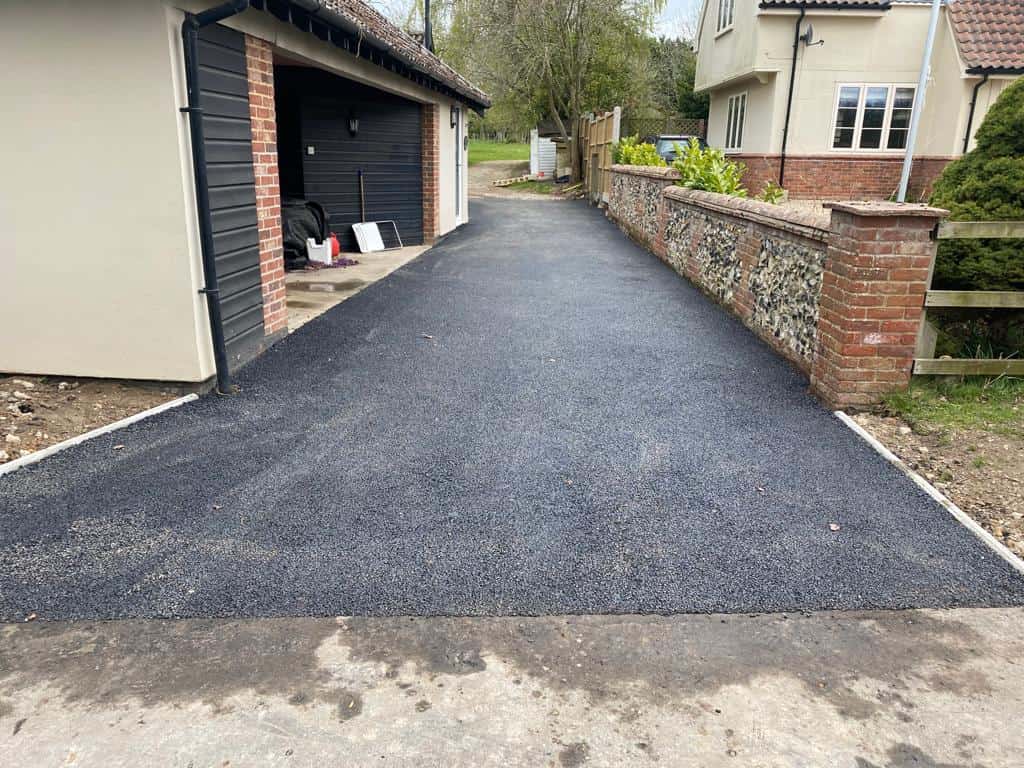
Why Is Professional Tarmac Driveway Installation Worth Considering?
A driveway has an important practical role in any property. It needs to provide dependable vehicle access, cope with repeated daily use and remain comfortable to walk across, while also contributing positively to the appearance of the home. Tarmac is particularly well suited to these requirements, but the performance of a finished tarmac driveway depends heavily on how it is installed.
For homeowners in Lowestoft, Suffolk, choosing professional tarmac driveway installation means looking beyond the visible surface. At Lowestoft Driveway Solutions, careful attention is given to preparation, ground conditions, levels, drainage, compaction and finishing so that the complete driveway is constructed as a functioning surface rather than simply covered with tarmac.
A Good Tarmac Driveway Starts Below the Surface
The smooth black finish is the part of a tarmac driveway everyone sees, but much of the important work takes place underneath it.
Tarmac needs a stable and appropriately prepared foundation. If the materials below the surface move or settle, the finished driveway can eventually reflect that movement through cracking, depressions and uneven areas.
Professional installation therefore considers the complete construction of the driveway.
This typically means assessing:
- Existing ground conditions
- Excavation requirements
- Sub-base preparation
- Compaction
- Finished levels
- Drainage
- Edge support
- Expected vehicle use
Getting these fundamentals right provides the tarmac with the support it needs.
Why Ground Preparation Matters So Much
A driveway is regularly subjected to concentrated loads from vehicles.
Without suitable preparation, softer or unstable areas underneath can gradually compress. This may cause the tarmac above to sink or deform.
Professional ground preparation aims to create a consistent foundation before surfacing begins.
Simply laying tarmac over an unsuitable existing area may create an attractive initial finish, but it does not correct weaknesses underneath. This is why preparation should be treated as a fundamental part of installation rather than an inconvenient preliminary stage.
Correct Compaction Creates Stability
The supporting layers of a driveway need to be properly compacted.
Compaction helps create a firm, stable platform capable of distributing vehicle loads rather than allowing individual areas to settle excessively.
Inadequate compaction may not always create an obvious problem immediately. Settlement can develop gradually after the driveway begins receiving regular use.
Signs of movement can eventually include wheel-track depressions, cracking and low areas.
Professional installation reduces this risk by paying close attention to the foundation before the final surface is completed.
Proper Levels Help the Driveway Manage Rainfall
A driveway should not only carry vehicles; it also needs to manage water effectively.
Rainfall needs to move across the surface in a controlled way rather than repeatedly collecting in unwanted depressions.
This means the finished levels and falls need to be considered during preparation.
Poorly planned levels can contribute to:
- Persistent puddles
- Wet low spots
- Water collecting against edges
- Uneven drainage across the driveway
- Areas remaining wet longer than surrounding sections
Professional driveway installation considers drainage as part of the complete design rather than trying to address it after the tarmac has already been laid.
Tarmac Provides a Smooth, Practical Surface
One of the main reasons homeowners consider tarmac is the consistency of the finished surface.
When professionally installed, it creates a relatively smooth driveway without numerous individual joints.
This makes it suitable for regular vehicle movements and straightforward pedestrian access.
A consistent surface can also make everyday activities around the driveway easier, whether moving bins, walking to and from vehicles or simply maintaining the surrounding area.
Tarmac Works Well for Different Driveway Shapes
Residential driveways are not always simple rectangles.
Some have curved entrances, changing widths, adjoining paths or awkward boundaries. Tarmac can be installed to follow a variety of layouts, making it a versatile surfacing choice.
However, irregular shapes make careful preparation and finishing particularly important.
The boundaries, levels and transitions should be properly considered so that the completed driveway looks intentional rather than simply fitted into the available area.
Edge Construction Should Not Be Overlooked
The perimeter of a driveway plays an important role in supporting the surface.
Where edges are poorly formed or inadequately supported, deterioration can begin around the outside and gradually work further into the tarmac.
Professional installation considers how the driveway will terminate against surrounding features.
Well-defined edges can also provide a cleaner visual transition between the tarmac and lawns, planting areas or other parts of the property.
Vehicle Use Should Influence the Installation
Not every driveway experiences exactly the same demands.
The number and type of vehicles, parking arrangements and frequency of movement can all affect how the surface is used.
For example, areas where vehicles regularly stop, turn or follow the same wheel paths can experience concentrated loading.
Understanding how the driveway will be used allows the construction to be approached accordingly.
Professional installation should therefore consider the practical requirements of the household rather than treating every driveway as identical.
Existing Driveways Need Proper Assessment
A new tarmac driveway does not always begin on completely untouched ground.
Many installations involve replacing or upgrading an existing driveway.
In these circumstances, the condition of the existing construction should be assessed before deciding what can reasonably remain.
Questions include:
- Is the existing base stable?
- Are there significant sunken areas?
- Has previous cracking developed?
- Are existing levels suitable?
- Does water currently collect?
- Are there weak or broken sections?
- Is the supporting construction appropriate for the proposed surface?
Covering existing problems does not necessarily remove them.
Professional assessment helps determine what preparation is needed before new tarmac is installed.
Resurfacing and Full Installation Are Not Always the Same
Where an existing driveway has a stable supporting structure, resurfacing may sometimes be appropriate.
However, a driveway containing widespread settlement, significant cracking or unstable areas may require more substantial preparation.
The correct approach depends on what is causing the deterioration.
If the base is moving, simply installing a fresh upper surface may allow the same movement to eventually affect the new tarmac.
This is why identifying the condition underneath is so important.
Professional Installation Helps Reduce Premature Problems
No external surface remains completely unchanged forever, but correct installation can help avoid problems caused by poor construction.
Common issues associated with inadequate preparation can include:
- Early cracking
- Localised sinking
- Wheel-track depressions
- Poor drainage
- Weak edges
- Uneven levels
- Recurring surface movement
These problems are often difficult to solve permanently if the underlying cause remains untouched.
A properly considered installation focuses on reducing avoidable weaknesses from the beginning.
Tarmac Can Create a Cleaner Approach to the Property
The driveway occupies a substantial part of the frontage of many homes.
A worn, heavily patched or uneven surface can therefore have a significant influence on the overall appearance of the property.
A professionally installed tarmac driveway creates a more consistent finish and can give the entrance a cleaner, more organised appearance.
The simplicity of tarmac is part of its appeal. It does not need an overly complicated design to create a smart and practical result.
Good Installation Is About More Than Appearance
A driveway can look excellent immediately after installation, but appearance alone does not reveal the quality of the work underneath.
The more meaningful test is how well the driveway has been prepared to perform as a complete surface.
This is why professional installation places importance on aspects that may eventually become invisible, including:
Sub-base condition
The supporting construction needs to provide stability.
Compaction
Materials should be consolidated appropriately before surfacing.
Levels
The driveway should be formed with its intended drainage and use in mind.
Edges
Perimeter areas need suitable consideration and support.
Surface finishing
The tarmac needs to be laid and compacted consistently to create the intended finish.
Each stage contributes to the overall result.
Why DIY Tarmac Installation Is Difficult
Tarmac driveway installation involves much more than spreading surfacing material across prepared ground.
Achieving a consistent result requires suitable preparation, equipment and an understanding of levels, compaction and material handling.
Errors made during the groundwork can remain hidden until the driveway has been in regular use for some time.
This makes professional installation particularly valuable. Experienced contractors can consider the entire driveway construction rather than concentrating exclusively on the final visible layer.
Professional Installation Allows the Whole Area to Be Planned Properly
A new driveway provides an opportunity to look at the complete area rather than simply replacing the old surface exactly as it was.
Existing access, parking arrangements, boundaries, levels and drainage can all be considered before work begins.
For example, homeowners may want to address:
- Awkward transitions
- Uneven sections
- Poorly defined edges
- Existing low spots
- Inefficient use of the available driveway space
- Areas where previous surfaces have repeatedly deteriorated
Planning these details before installation can create a more practical finished driveway.
Small Installation Details Can Make a Significant Difference
The quality of driveway construction is often reflected in the details.
Transitions between surfaces should be carefully considered. Edges should look deliberate. Surface levels should remain consistent, and the driveway should work naturally with its surroundings.
These details may appear relatively minor individually, but together they influence how professional the completed installation looks and performs.
An experienced driveway contractor understands that a successful result depends on consistency throughout the project.
When Is a New Tarmac Driveway Worth Considering?
Professional tarmac installation may be worth exploring when an existing driveway has reached a stage where individual repairs are no longer providing a satisfactory result.
Signs can include:
- Widespread cracking
- Numerous previous patches
- Repeated sinking
- Persistent standing water
- Crumbling surface areas
- Significant unevenness
- Failing edges
- General deterioration across most of the driveway
A new installation can also be considered where an existing unsurfaced or unsuitable area needs to become practical for regular vehicle access.
The important step is establishing what preparation the site requires before the tarmac is installed.
Why Professional Assessment Adds Value
Every driveway has different conditions.
Ground stability, existing construction, surface levels, access and intended vehicle use can vary considerably from one property to another.
Professional assessment allows these factors to be considered before work begins.
At Lowestoft Driveway Solutions, we look at the existing area and determine what is required to create an appropriate foundation and finished tarmac surface.
This approach helps ensure that the installation is based on the actual site rather than a standard solution applied without consideration of existing conditions.
A Well-Installed Driveway Is Designed for Everyday Use
A residential driveway is a working surface.
Vehicles may enter and leave several times each day. People walk across it, bins are moved over it and rainfall must be managed whenever the weather changes.
Professional tarmac installation takes these everyday demands into account.
The objective is not simply to produce a newly surfaced area. It is to create a practical driveway that works effectively as part of the property.
Preparation Is Where Professional Work Shows Its Value
Much of the value in professional driveway installation comes from work that will never be visible once the project is finished.
Appropriate excavation, stable supporting layers, thorough compaction and carefully established levels provide the foundation for everything above them.
Skipping or reducing the quality of these stages can compromise even a well-finished surface.
For this reason, homeowners considering tarmac should look at the installation as a complete construction process rather than simply choosing a surface material.
Conclusion
Professional tarmac driveway installation is worth considering because the performance of the finished surface depends heavily on correct preparation, stable groundwork, compaction, drainage, levels and edge construction. Tarmac itself provides a smooth and practical surface, but its effectiveness is closely connected to the quality of the work underneath it.
For homeowners in Lowestoft, Suffolk, Lowestoft Driveway Solutions provides professional tarmac driveway installation with careful attention to the complete construction of the driveway. If your existing surface is deteriorating or you are considering a new tarmac driveway, our experienced team can assess the area and recommend an appropriate installation approach designed around the condition and everyday requirements of your property.
Call us on: 01502 447 997
Click here to find out more about Lowestoft Driveway Solutions
Click here to complete our contact form and see how we can help with your driveways.